
Not too late to fix controversial Fast-track Approvals Bill
10 Dec 2024
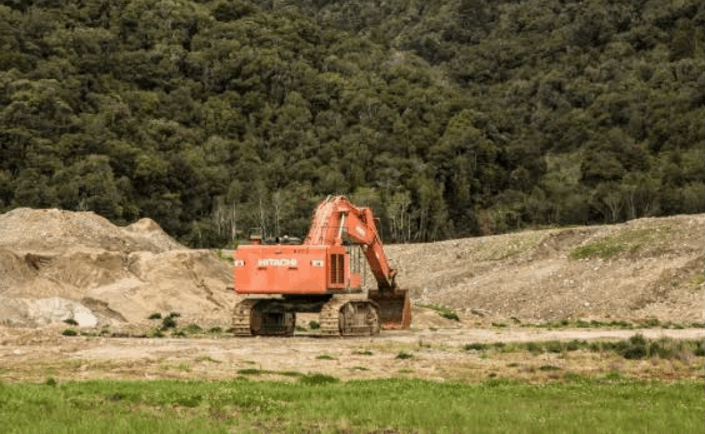
 |
| PHOTO: Environmental Defence Society |
Media release | Parliament is expected to pass the Fast-track Approvals Bill into law in the next few days.
“This highly contentious bill attracted record opposition with around 27,000 submissions, mostly opposed. It creates a fast-track, one-stop-shop for consenting projects of significant regional or national benefit and overrides environmental standards,” said EDS CEO Gary Taylor.
“There have been some welcome changes to it since introduction. Notably, final decision-making on approvals has been shifted away from Ministers and placed in the hands of expert panels. That reduces the potential for corrupt practices once projects are in the fast-track process and restores some sense of confidence that there will be a proper consideration of applications.
“The idea of a fast-track process is not new. We had one under the Covid-19 Recovery (Fast-track Consenting) Act 2020, another under the Natural and Built Environment Act 2023, which has survived repeal of that law. A key difference is that this new Bill enables approvals under a range of other statutes, not just the Resource Management Act. That is not objectionable, if other provisions are appropriate.
“But they are not. The Bill retains several significant flaws that collectively mean that if enacted in its present form would make it the worst environmental legislation in our history, with scope for bad projects with significant adverse impacts to get approved.
“The biggest flaw is the biased purpose clause of the Bill, which takes primacy and enables development irrespective of environmental impacts. That is a crude and dangerous approach. If the clause was amended to give equal weight to the environment or to require approvals to be consistent with sustainable management, that would be a very significant improvement.
“Another flaw is that environmental advocates and communities are not entitled to submit on projects unless they are invited to do so. Giving such entities (including EDS) the right to make submissions on applications would enable the introduction of independent expert evidence to the evaluation process. Otherwise, panels will be unduly reliant on evidence from applicants with the public shut out from the process.
“Other objectionable matters needing attention at the Committee of the Whole House stage include the ability to consent most prohibited activities; the way panels are appointed with scope for Ministerial interference; the weak way the Bill deals with Water Conservation Orders and public conservation land; and the numerous ‘zombie’ projects in the proposed schedule that have already been declined consent but are now able to have another go.
“We therefore await the next stages of the Bill and any Amendment Papers with keen anticipation and a little bit of hope,” Mr Taylor concluded.
print this story
Public conservation land maps show risk of sale
Thu 18 Jun 2026
Media release | Forest & Bird has today released new maps highlighting public conservation land across Aotearoa New Zealand that could be more exposed to development or sale.

Coromandel protections could be stripped away for mining through hidden law change
Wed 17 Jun 2026
Media release| Forest & Bird is warning that a hidden provision in the Government’s Conservation Amendment Bill could strip away long-standing protections and open up parts of the Coromandel Peninsula to mining.

ANZ confronted with petition and video screening after report exposes fossil fuel ties
Mon 15 Jun 2026
Media release: 350 Aotearoa | A petition signed by over 3000 New Zealanders was handed over to ANZ, calling on the bank to cut banking services to coal expansion companies. The petition comes as the annual ‘Banking on Climate Chaos’ report has confirmed that ANZ continues to back fossil fuel expansion.
Communities need to prepare for increased landslide risk
12 Jun 2026
Media release: Te Whare Wānanga o Waitaha University of Canterbury | New UC-led research shows where future Cyclone Gabrielle-like storms could cause more landslides and how communities can reduce the risk.

NZ’s largest rooftop solar switched on at Fisher & Paykel Healthcare
11 Jun 2026
Media release | Sunergise, New Zealand’s leading commercial solar company, has switched on the country’s largest-ever rooftop solar installation at Fisher & Paykel Healthcare’s East Tāmaki campus in Auckland.

Antarctic surface melt set to increase dramatically this century, new study finds
10 Jun 2026
Media release – Victoria University | New research shows surface melting across Antarctica is set to intensify and spread dramatically over the 21st century, with melt increasing by 10 times and the area affected growing by more than 10 percent by 2100 if global temperatures continue to rise.

The environment needs fixes now, says new director
5 Jun 2026
Media release: Auckland University | Innovative solutions to environmental problems are urgently needed, because our wellbeing depends on it, says Professor Dan Tompkins, the new director of the Centre for Climate, Biodiversity and Society, Ngā Ara Whetū, at the University of Auckland.

Entries open for 2026 Sustainable Business Awards
2 Jun 2026
Media release - Sustainable Business Network | Entries are now open for the 2026 Sustainable Business Awards, New Zealand’s pre-eminent sustainability awards. Now in their 24th year, the Awards celebrate outstanding innovation and leadership in sustainability.

Science losing the long game
29 May 2026
Media release: New Zealand Association of Scientists | Budget 2026 pushes the science system into a quiet purgatory, with zero announcements from the Minister’s office since 1 April.
New Plymouth residents say “no to LNG”
29 May 2026
Media release: Climate Justice Taranaki | At a public meeting in New Plymouth this Tuesday attended by about 100 local residents, the vast majority signed an ‘Urgent Plea’ to stop the proposed Liquefied Natural Gas import facility, addressed to Prime Minister Christopher Luxon, Energy Minister Simeon Brown, and Cabinet Ministers.
