
Research sheds light on climate change education gaps
21 Oct 2024
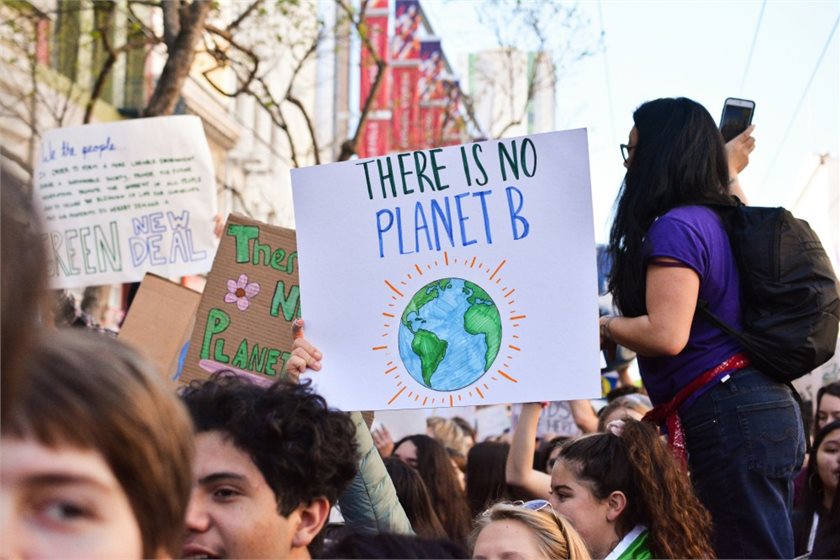
The former school science teacher graduated recently with a PhD in Education and researched the experiences of 17 self-nominated, climate-conscious New Zealand teachers for his study.
He says education should be at the heart of enhancing climate action in New Zealand, but that his research discovered our education system needs to liberate standardised assessment practices to empower teachers to develop relevant and impactful courses and assessments.
“Education is a lever for bringing society towards a more sustainable way of being, but our current education system perpetuates the existing socioeconomic structures responsible for climate change without encouraging the critical thinking necessary to challenge them.” Education is the pathway to making policies that direct our society away from the climate cliff we are hanging off, he says.
“If you do not educate people about climate change and the urgent need to develop sustainable ways of living, how do you expect them to follow you or vote for the policies we need to make real change?”
He says teachers who participated in the study reported feeling like they were isolated in trying to advance the curriculum to educate students about our changing climate and a way towards a more sustainable future.
“They talked about feeling very alone at their schools in trying to enact changes to the curriculum and shift students to adopt long-term thinking about sustainability,” he says.
Thomas’ study participants reported that many other teachers weren’t interested or would leave the tearoom when they talked about climate change.
“They reported feeling like they were a lone voice or viewed as the ‘greenies’, and this was stronger in areas reliant on more intensive carbon-emitting industries like dairy farming or coal mining.”
Thomas says he decided to complete his PhD and research in climate education in New Zealand after submitting a paper to the New Zealand Association for Research in Education (NZARE) Conference in Christchurch in 2019. The conference theme was ‘Revisioning education: sustaining change, wellbeing and innovation’. His paper argued that climate change education should be a priority in New Zealand schools.
“I realised at the conference... I was the only speaker that had the word climate change in my presentation.”
He says the current NCEA assessment structure stifles innovative teaching by limiting courses developed to narrowly defined assessments, but his research showed school leadership, including principals and the leadership team, could chart a different course and make climate education a priority.
This included the development of interdisciplinary learning teams and incorporating real-world problems into the curriculum.
He had done this while teaching at Mercury Bay Area School, a composite school in the Coromandel Peninsula’s Whitianga, implementing a course that combined Earth and space science with statistics for year 12 and 13 students.
“I was supported by the principal at the time to do that work which was excellent.”
Thomas is now a lecturer at EcoQuest, centre for indigeneity, ecology, and creativity in Whakatiwai, teaching undergraduate courses in ecology.
He hopes his research acts as a ‘think piece’ to be considered and discussed by school educators and leaders across New Zealand.
“If we can build capacity in school leaders and teachers through the development of knowledge and skills, and providing time and space, we will be able to see a cultural embedding of sustainable living and climate change education into the ways we all teach and learn.
“If we don’t solve climate change, then nothing else matters anymore. We can’t keep tinkering around the edges. We must stop the Titanic from sinking and then we can talk about the casino on the top deck.”
print this story

The Reality of Everything: A sold-out symposium at VUW
Thu 25 Jun 2026
Media release: Victoria University of Wellington | What do rising grocery bills, soaring insurance premiums, food producers under pressure, and growing international instability have in common? According to organisers of The Reality of Everything Symposium in Wellington, they are all part of a much bigger story – one that New Zealanders urgently want to understand.

New map highlights mining threat associated with controversial conservation reforms: Greenpeace
Wed 24 Jun 2026
Media release | Greenpeace has launched an interactive online map exposing the overlap between known deposits of minerals the Government has deemed "critical" and the public conservation land that would be easier to sell off and exploit under the Government's Conservation Amendment Bill.

Sustainability profession ‘comes of age’ – but pressure remains beneath the surface
Wed 24 Jun 2026
Media release: Sustainable Business Council | New research shows the sustainability profession in Aotearoa New Zealand has firmly established itself at the centre of business strategy – but ongoing pressures around capability, career pathways and pay are threatening to stall its progress.

Calder Stewart to invest $110m for solar across industrial portfolio
Tue 23 Jun 2026
Media release | NZ’s largest industrial landowner is preparing one of the country’s most significant industrial rooftop solar rollouts, with Calder Stewart set to invest more than $110 million in solar panels and battery storage across its property portfolio.
High Court hearing highlights the 'shrinking pool' for fisheries research and science
22 Jun 2026
Media release: Environmental Law Initiative | At the close of a four-day High Court hearing challenging the government’s under-levying of the fishing industry, the Environmental Law Initiative (ELI) says more science, research and observer coverage is needed to protect marine wildlife and ecosystems from the impacts of fishing.

Forest owners call for wider FENZ review as funding changes considered
22 Jun 2026
Media release - Forest Owners Association | The Government’s review of how Fire and Emergency New Zealand (FENZ) is funded should be accompanied by a wider examination of whether FENZ is delivering for rural communities, forest owners say.
Public conservation land maps show risk of sale
18 Jun 2026
Media release | Forest & Bird has today released new maps highlighting public conservation land across Aotearoa New Zealand that could be more exposed to development or sale.
Coromandel protections could be stripped away for mining through hidden law change
17 Jun 2026
Media release| Forest & Bird is warning that a hidden provision in the Government’s Conservation Amendment Bill could strip away long-standing protections and open up parts of the Coromandel Peninsula to mining.
ANZ confronted with petition and video screening after report exposes fossil fuel ties
15 Jun 2026
Media release: 350 Aotearoa | A petition signed by over 3000 New Zealanders was handed over to ANZ, calling on the bank to cut banking services to coal expansion companies. The petition comes as the annual ‘Banking on Climate Chaos’ report has confirmed that ANZ continues to back fossil fuel expansion.
Communities need to prepare for increased landslide risk
12 Jun 2026
Media release: Te Whare Wānanga o Waitaha University of Canterbury | New UC-led research shows where future Cyclone Gabrielle-like storms could cause more landslides and how communities can reduce the risk.
