
Incinerator will put NZ on the wrong track
8 Oct 2024
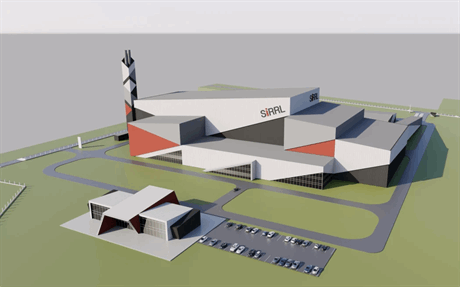 |
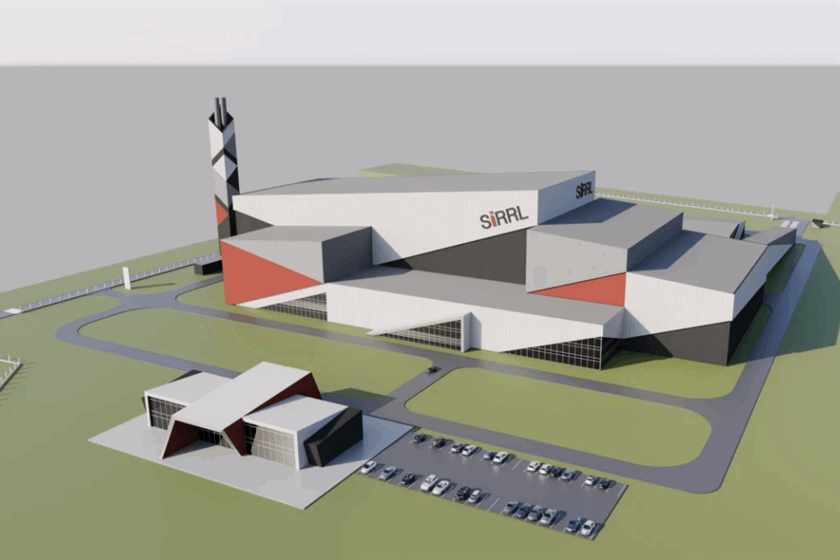
| An artist's impression of the proposed waste-to-energy plant in Waimate, South Canterbury that SIRRL has been pushing to build since 2021. PHOTO: SIRRL |
Media release | A large-scale rubbish incinerator has been included in the list of projects to go into Schedule 2 of the Coalition Government’s Fast Track Bill.
South Island Resource Recovery Limited’s (SIRRL) resource consent application proposal to establish an incinerator near Waimate in South Canterbury had already been called in and referred to the Environment Court so that the incinerator’s impacts could be properly considered.
“We are concerned that including the Incinerator in the Fast Track project list will mean this process gets short circuited,” says Sue Coutts from the Zero Waste Network.
“This large incinerator proposal is the first of its type in New Zealand so it is critical that all the impacts are properly considered.”
“Cutting through ‘red and green tape’ doesn’t make economic or practical sense if it leaves us with a legacy of contaminated sites, land and water pollution and communities afflicted with long term health problems and cost obligations.” said Sue Coutts.
“Incinerators create CO2 emissions, pollute land, air and water sources, have serious effects on human health and impact primary production. They also lock communities into long term contracts to cover their capex and operational costs.”
“Developing our economy and addressing our infrastructure deficit has to go hand in hand with making sure new development is safe and affordable for families, communities and primary producers.”
“This incinerator will emit dioxins which can cause reproductive and developmental problems, damage the immune system, interfere with hormones and cause cancer. These will settle on surrounding communities and farmland, potentially travelling hundreds of kilometres downwind. In France, whole regions have been warned by French Health Authorities about food contamination from incinerator-produced dioxins.”
“The incinerator will burn 365,000 tonnes of material each year including materials that are recyclable, reusable and compostable. The Waimate community only produces 1280 tonnes of waste each year, so large volumes of rubbish will be trucked in, it is likely that some of this will come from overseas.
“New development has to help us meet existing commitments like New Zealand’s emissions reductions targets. Incinerators burn large amounts of plastic which is made from oil. They also require fossil fuel inputs to keep the incineration process going so running a large incinerator would create a large new source of CO2 emissions in the waste sector.”
“A small amount of heat and energy would be created by an incinerator but this is not renewable energy so it does not help decarbonise our economy.”
“Denmark is starting to shut down its incinerators having realised that it cannot meet its emissions reduction targets while burning large volumes of domestic and imported rubbish and recycling.”
“Taking a sound approach to regional development means looking beyond the Company’s sales pitch to understand the real impacts of proposals on families, communities and the local economy. Several iterations of this project have already been put up for consideration and rejected due to concerns about impacts, feasibility and process.”
“SIRRL’s incinerator proposal has been shoehorned into the Schedule 2 list but it is not a good fit. Incineration is a disposal method not a form of resource recovery. Focusing on establishing effective product stewardship schemes and reducing waste at source are constructive ways to address the waste and resource recovery sector’s infrastructure deficit.” said Sue Couttts.
“Communities and businesses want infrastructure that helps them to achieve their waste and emissions reduction goals. It is so frustrating to see these Zombie projects lurching back to life time and time again when the evidence from existing incineration facilities overseas clearly shows the negative effects on human health, primary production and emissions reductions.”
print this story

The Reality of Everything: A sold-out symposium at VUW
Thu 25 Jun 2026
Media release: Victoria University of Wellington | What do rising grocery bills, soaring insurance premiums, food producers under pressure, and growing international instability have in common? According to organisers of The Reality of Everything Symposium in Wellington, they are all part of a much bigger story – one that New Zealanders urgently want to understand.

New map highlights mining threat associated with controversial conservation reforms: Greenpeace
Wed 24 Jun 2026
Media release | Greenpeace has launched an interactive online map exposing the overlap between known deposits of minerals the Government has deemed "critical" and the public conservation land that would be easier to sell off and exploit under the Government's Conservation Amendment Bill.

Sustainability profession ‘comes of age’ – but pressure remains beneath the surface
Wed 24 Jun 2026
Media release: Sustainable Business Council | New research shows the sustainability profession in Aotearoa New Zealand has firmly established itself at the centre of business strategy – but ongoing pressures around capability, career pathways and pay are threatening to stall its progress.

Calder Stewart to invest $110m for solar across industrial portfolio
Tue 23 Jun 2026
Media release | NZ’s largest industrial landowner is preparing one of the country’s most significant industrial rooftop solar rollouts, with Calder Stewart set to invest more than $110 million in solar panels and battery storage across its property portfolio.

High Court hearing highlights the 'shrinking pool' for fisheries research and science
22 Jun 2026
Media release: Environmental Law Initiative | At the close of a four-day High Court hearing challenging the government’s under-levying of the fishing industry, the Environmental Law Initiative (ELI) says more science, research and observer coverage is needed to protect marine wildlife and ecosystems from the impacts of fishing.

Forest owners call for wider FENZ review as funding changes considered
22 Jun 2026
Media release - Forest Owners Association | The Government’s review of how Fire and Emergency New Zealand (FENZ) is funded should be accompanied by a wider examination of whether FENZ is delivering for rural communities, forest owners say.
Public conservation land maps show risk of sale
18 Jun 2026
Media release | Forest & Bird has today released new maps highlighting public conservation land across Aotearoa New Zealand that could be more exposed to development or sale.
Coromandel protections could be stripped away for mining through hidden law change
17 Jun 2026
Media release| Forest & Bird is warning that a hidden provision in the Government’s Conservation Amendment Bill could strip away long-standing protections and open up parts of the Coromandel Peninsula to mining.

ANZ confronted with petition and video screening after report exposes fossil fuel ties
15 Jun 2026
Media release: 350 Aotearoa | A petition signed by over 3000 New Zealanders was handed over to ANZ, calling on the bank to cut banking services to coal expansion companies. The petition comes as the annual ‘Banking on Climate Chaos’ report has confirmed that ANZ continues to back fossil fuel expansion.
Communities need to prepare for increased landslide risk
12 Jun 2026
Media release: Te Whare Wānanga o Waitaha University of Canterbury | New UC-led research shows where future Cyclone Gabrielle-like storms could cause more landslides and how communities can reduce the risk.
