
Record level of KiwiSaver investments in companies causing harm
4 Sep 2023


Media release | New data analysis from charity Mindful Money shows that Kiwisaver investments in companies the public want to avoid have hit record levels.
Across all KiwiSaver funds, there is $8.6 billion of funds invested in issues that the public want to avoid. This amounts to 8.9% of total KiwiSaver funds.
Kiwis have been clear in annual surveys that they do not want to invest in companies that cause harm to the climate, to the environment, to animals and to society. Yet many funds continue to invest in those companies of concern.
Barry Coates, Founder and CEO of Mindful Money commented: “The level of KiwiSaver investment in harmful companies has never been higher. While most KiwiSaver providers say they are investing responsibly or using an ESG (Environmental, Social and Governance) framework, only a few funds are comprehensively avoiding investments in harmful companies. Most are continuing to invest a significant proportion of the public’s funds in issues that Kiwis want to avoid.”
Some funds invest in companies causing harm and then use their shareholder power to make changes. But all too often, this ‘stewardship’ approach does little to justify continued investment in harmful companies. There are still only a few fund managers who can show significant results from their engagement activity, and few have a credible pathway to sell their shares if harmful impacts continue.
Fossil fuel investment by KiwiSaver funds is now at a record level of $3.2 billion. Despite their promises to transition to renewable energy, most of the oil and gas producers are still expanding their exploration and field development.
Mindful Money’s recent report showed that companies like Shell, BP, Exxon and Chevron have been stringing investors along with greenwash, promising a transition to clean energy when in fact most of their capital expenditure is going into their core fossil fuels business.
Barry Coates commented: “During this climate crisis, Kiwis should be appalled that the amount their KiwiSaver funds have invested in companies expanding their fossil fuel production has more than doubled over the eighteen months to March 2023.”
Mindful Money’s website identifies the fossil fuel companies that are expanding. Barry Coates commented: “KiwiSaver investors with holdings in those companies should be aware their funds are contributing to the climate crisis.
“These companies are not only destroying the climate, but are a poor financial investment. Their shares have, on average, lost money over the past decade and they face growing losses from stranded assets as their core business declines.
“Meanwhile KiwiSaver fund providers have been investing far less in renewable energy developers and the companies in transition on a 1.5 degrees C pathway.
“KiwiSaver investors should ask their providers for an explanation or consider switching to a fund that invests ethically, in renewable energy and other climate solutions.”
The second highest investment of $2 billion is in companies that practise animal cruelty, including products tested on animals (for reasons other than human health), factory farming, fur and the use of animals for entertainment.
The highest issue of concern to members of the public is companies that commit human rights violations, including labour rights violations, trafficking and violence against civilians. A total of $1.4 billion is invested in companies such as Meta (digital harm and breaches of privacy), the mining company Rio Tinto (community harm) and Johnson & Johnson (product safety).
There is KiwiSaver investment of just over $1 billion in the category of social harm, including alcohol companies such as Diageo plc, pornography, gambling and tobacco.
“It is now 8 years since there was a public outcry over the amount of KiwiSaver funds in tobacco. The latest data shows an annual growth of 50% in investments in tobacco companies such as Philip Morris, British American Tobacco and Imperial Brands, to more than $21 million.”
There is also $292 million in weapons companies, including nuclear weapons producers, such as BAE and Lockheed Martin, and handgun producers and retailers.
Consumers have a right to know about their investments
Mindful Money provides free information to the public on the ‘companies of concern’, the issues that consumers most want to avoid.
Barry Coates commented: “There should be more transparency in the KiwiSaver scheme. Few KiwiSaver providers reveal the full list of companies they invest in and none identify the companies that are likely to be of concern to the public. People have a right to know. Many people using the Mindful Money website are shocked to find out what companies they are invested in.”
“The investment sector appears to be an outlier. Retailers of most consumer products are acutely aware of their customers’ concerns. However, KiwiSaver providers rarely provide their customers with information about the consequences of their investment decisions. This should be common practice in an era of growing concern over climate change, the environment and social equity.”
print this story

New map highlights mining threat associated with controversial conservation reforms: Greenpeace
Today 11:30am
Media release | Greenpeace has launched an interactive online map exposing the overlap between known deposits of minerals the Government has deemed "critical" and the public conservation land that would be easier to sell off and exploit under the Government's Conservation Amendment Bill.

Sustainability profession ‘comes of age’ – but pressure remains beneath the surface
Today 11:30am
Media release: Sustainable Business Council | New research shows the sustainability profession in Aotearoa New Zealand has firmly established itself at the centre of business strategy – but ongoing pressures around capability, career pathways and pay are threatening to stall its progress.

CLIMATE CALENDAR
Today 11:30am
The Carbon News calendar of talks, events, conferences, consultations, and petitions related to climate change.

Calder Stewart to invest $110m for solar across industrial portfolio
Tue 23 Jun 2026
Media release | NZ’s largest industrial landowner is preparing one of the country’s most significant industrial rooftop solar rollouts, with Calder Stewart set to invest more than $110 million in solar panels and battery storage across its property portfolio.
High Court hearing highlights the 'shrinking pool' for fisheries research and science
Mon 22 Jun 2026
Media release: Environmental Law Initiative | At the close of a four-day High Court hearing challenging the government’s under-levying of the fishing industry, the Environmental Law Initiative (ELI) says more science, research and observer coverage is needed to protect marine wildlife and ecosystems from the impacts of fishing.

Forest owners call for wider FENZ review as funding changes considered
Mon 22 Jun 2026
Media release - Forest Owners Association | The Government’s review of how Fire and Emergency New Zealand (FENZ) is funded should be accompanied by a wider examination of whether FENZ is delivering for rural communities, forest owners say.
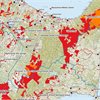
Public conservation land maps show risk of sale
Thu 18 Jun 2026
Media release | Forest & Bird has today released new maps highlighting public conservation land across Aotearoa New Zealand that could be more exposed to development or sale.

Coromandel protections could be stripped away for mining through hidden law change
17 Jun 2026
Media release| Forest & Bird is warning that a hidden provision in the Government’s Conservation Amendment Bill could strip away long-standing protections and open up parts of the Coromandel Peninsula to mining.
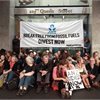
ANZ confronted with petition and video screening after report exposes fossil fuel ties
15 Jun 2026
Media release: 350 Aotearoa | A petition signed by over 3000 New Zealanders was handed over to ANZ, calling on the bank to cut banking services to coal expansion companies. The petition comes as the annual ‘Banking on Climate Chaos’ report has confirmed that ANZ continues to back fossil fuel expansion.
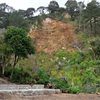
Communities need to prepare for increased landslide risk
12 Jun 2026
Media release: Te Whare Wānanga o Waitaha University of Canterbury | New UC-led research shows where future Cyclone Gabrielle-like storms could cause more landslides and how communities can reduce the risk.
