
Farmer's plea to council: Let us help unblock roads after severe weather
3 Jun 2026
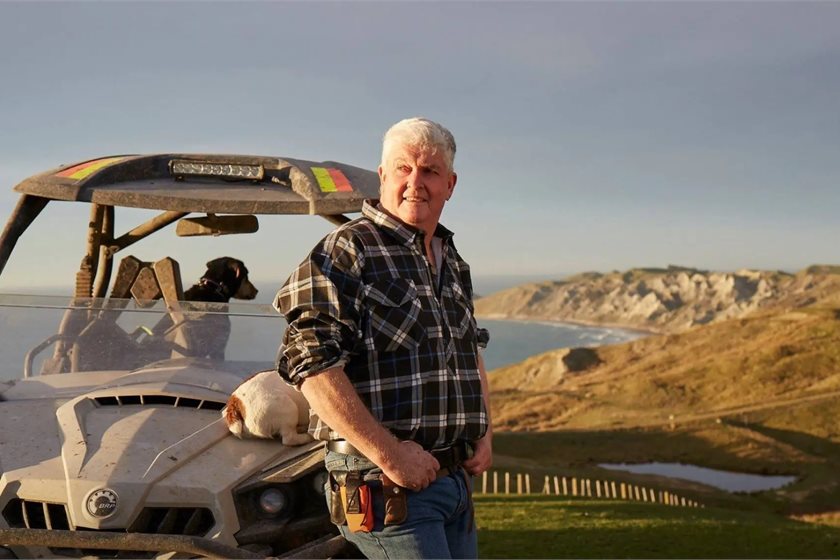
A Central Hawke’s Bay farmer says it’s time for a conversation about allowing skilled and properly equipped locals to help councils clear debris and reopen roads after severe weather events.
In January a Scottish local council made BBC headlines for calling on individuals and communities to take more responsibility for their roads during weather events.
Aberdeenshire Council said its snow-clearing bills were soaring and if the community pitched in more, it would keep rates down.
Mark Warren, who took over his family farm in Waipari on the East Coast of Central Hawke’s Bay in 1984, said New Zealand needed to have the same attitude, and doing so would save ratepayers significantly.
“Ratepayers should be demanding efficiency and using local machinery on or near the spot to do critical work rather than forking out thousands for a contractor to come and do what a farmer could do in 10 minutes,” Warren said.
Central Hawke’s Bay District Council’s group manager of infrastructure and asset management Mark Kinvig said the council had significant responsibilities under the Health & Safety at Work Act 2015 to ensure work was carried out safely.
For that reason, contractual arrangements needed to be in place for any work after severe weather, he said.
“The council also needs to ensure that any road-related work funded by council and NZTA is properly commissioned and represents good value for money."
He said for those reasons, formal arrangements with contractors would always need to form a core part of the council’s response and tree management approach.
Rangitīkei Mayor Andy Watson, who has seen firsthand what locals can accomplish during weather events, says Warren’s suggestions are reasonable.
“It has happened in our district,” Watson said.
“The attitude for most councils is to say thanks and turn a blind eye.”
In February, farmers and locals cleared fallen trees and slips on a rural road in the Rangitīkei district following a storm that trapped about 20 cars.
Watson said, beyond the obvious safety aspects, slips were a challenge to handle.
Regional council rules meant debris could not just be pushed into rivers, and council contractors often had to cart soil from slips over large distances to comply, he said.
Warren said he wanted conversations to come up with solutions to problems, because red tape was “strangling common sense”.
The 4WD enthusiast spent years rallying in his purpose-built Toyota Land Cruiser before turning his expertise into a career teaching thousands of people to survive driving in tough conditions.
“I’ve cleared roads before, and then half an hour later, a truck with a huge digger on the back comes looking for the problem.
“I have no issue with the job contractors do, and understand they are trying to make a profit, but if locals can do it, it could help ratepayers.”
He said there was always a rotating blame game over why it was unworkable.
“Central government makes unworkable rules and the CHB Council, along with all other councils, must abide by them.
“Council seems more worried about protecting themselves than saving money.”
Kinvig said the council was open to exploring with local communities and farmers the potential for them to assist with emergency response activities.
“We don’t have a formal arrangement with farmers for clearing Central Hawke’s Bay’s roads.
“If there was one, before anything was formalised, we would need to map out the work and the risks of doing that work, so the farmers would be able to do the appropriate health and safety training/certification related to that work to ensure their safety and that of other road users,” he said.
LDR is local body journalism co-funded by RNZ and NZ On Air.

print this story

NZ at risk of missing all its climate goals: Commission
Wed 22 Jul 2026
By Liz Kivi | Aotearoa New Zealand’s rate of emissions reduction needs to more than double, with progress stalling since 2024 after the Coalition Government took power, according to the latest report from the Climate Change Commission.

Resource management Bills 'not yet ready to be enacted', says Upton
Wed 22 Jul 2026
By Oli Lewis | The two Bills to replace the Resource Management Act are not ready to be enacted and there is no way of knowing how they will affect the environment, the Parliamentary Commissioner for the Environment says.

Green Party takes ‘electric election’ up a notch
Tue 21 Jul 2026
By Liz Kivi | The Green Party is promising to cut power bills and establish a publicly owned company, ‘Kiwipower,’ to deliver affordable renewable energy.
'Shocking' changes to RMA replacement further weakens environmental protections –EDS
Tue 21 Jul 2026
By Shannon Morris-Williams | The select committee's report back on bills to replace the Resource Management Act fails to address the Environmental Defence Society's "massive concerns" with the legislation.

NZ First’s oil and gas plan ‘doesn’t stack up’ – professor
Tue 21 Jul 2026
By Liz Kivi | NZ First’s plan to invest $1 billion in offshore oil and gas exploration doesn’t make economic sense, says Auckland University emeritus professor and energy economics expert Basil Sharp.

SEANZ urges Govt not to sign contract for LNG before the election
Tue 21 Jul 2026
The Smart Energy Alliance has penned an open letter to the Government urging ministers not to sign a binding agreement for an LNG import facility before November’s election.

Study outlines methane-cutting options for NZ livestock
Tue 21 Jul 2026
By Shannon Morris-Williams | Breeding, feed and forage strategies could play a key role in reducing methane emissions from New Zealand's grazing livestock, with researchers concluding that a combination of approaches will be needed to achieve meaningful cuts.

NZ First promises $1 billion for offshore oil and gas
Mon 20 Jul 2026
By Liz Kivi | New Zealand First wants to “drill baby drill,” and has made an election campaign promise of $1 billion to survey New Zealand’s offshore basins to extract oil and gas, in an announcement at the party’s campaign launch on Sunday.

Govt changes risk weakening climate policy, officials warn
Mon 20 Jul 2026
By Shannon Morris-Williams | The Government is pushing ahead with plans to remove health and life insurers from New Zealand's climate disclosure regime despite official advice that the move risks undermining the effectiveness of the reporting system anyway.

NZ’s complex problems require visionary solutions, not quick fixes. Here’s how we can govern for the future
Mon 20 Jul 2026
By Jonathan Boston, Te Herenga Waka — Victoria University of Wellington As New Zealand heads toward another general election, political attention is naturally focused on the issues touching people’s lives right now.
