
Northland community climate resilience fund faces massive demand
Today 11:45am
By Susan Botting, Local Democracy Reporter
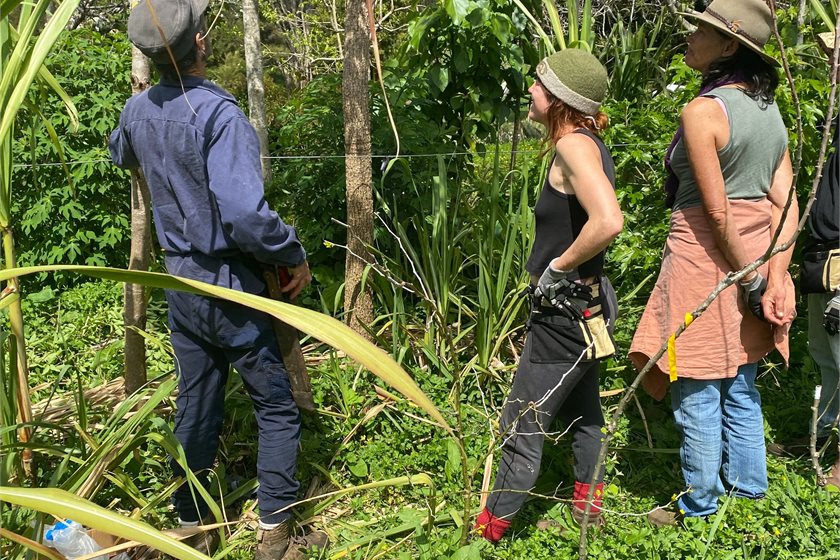
A three‑year‑old ratepayer-funded Northland Regional Council community climate resilience fund is experiencing strong demand, with to date around five times more money sought than is available.
The contestable $600,000‑a‑year fund has been among the largest per‑capita community climate funds in the country. Since it launched in 2024, $1.2 million has been paid to 45 projects, while about $6 million has been requested for 171 projects.
Northland Regional Council chair Pita Tipene said the fund’s core goal was to build resilience to climate change through community‑led action and by strengthening local capacity.
“The fund has prioritised vulnerable communities, directing investment to places facing the highest climate risks and historically lower adaptive capacity,” Tipene said.
“This supports a fair and inclusive transition to resilience, ensuring communities most exposed to climate impacts are better supported.”
Funded projects focus on practical measures to strengthen resilience to climate and environmental pressures across Northland, with a strong emphasis on everyday essentials such as water, energy and food security.
“Collectively these investments reduce exposure to climate risk while improving local preparedness and self‑sufficiency,” Tipene said.
“Recent severe weather events have reinforced both the need for this investment and the role communities can play in supporting impacted whānau when disruption occurs.”
He said the fund was helping Te Tai Tokerau communities better prepare for an increasingly volatile future.
“We’re already seeing how severe weather events can threaten lives, damage homes and infrastructure, leave communities cut off, and compromise access to food, water and energy supplies.”
Applications for the 2026 funding round close on April 27, but the funding pool has been reduced by 20 per cent to $480,000, pending adoption of the council’s 2026‑27 Annual Plan. Tipene said the reduction was part of efforts to achieve a nil council rates increase for the coming year.
He said success was not measured solely by infrastructure delivered, but by improvements in community capability, confidence and readiness.
“Training, upskilling and leadership development – particularly within local organisations, hapū and community groups – are enabling communities to lead their own resilience responses rather than relying on external intervention.”
Tipene said the fund strongly supported Northland Civil Defence readiness, with projects improving continuity of power, water availability and community facilities’ ability to operate as resilience hubs during disruptions.
In 2025, marae‑based solar systems were among 22 funded projects including at Ngāi Tūpoto Trustees Marae at Motukaraka Point in north Hokianga ($35,000) and Puketawa Marae in the Utakura Valley between Hōreke and Ōkaihau ($26,000).
Water security upgrades were funded. Morehu Marae in Pawarenga received about $7,000 to replace its water tank. Te Rūnanga o Ngāti Hine Trust was granted $40,000 for its Tanks a Lot project, installing water storage across vulnerable Ngāti Hine communities in the Kawakawa–Moerewa and inland Bay of Islands area.
Food security initiatives were another major focus. The Hokianga Community Educational Trust received $36,786 for He Kete Kai o Hokianga – Future Proofing our Hokianga Food Systems, aimed at strengthening local food resilience.
Climate Change Taitokerau Northland Trust was granted $20,000 to develop a region‑wide kai sovereignty strategy, designed to reduce reliance on external supply chains and improve long‑term food self‑sufficiency.
Nature‑based resilience projects were also supported. These included the Bream Bay Coastal Care Trust’s coastal restoration project ($23,000) along an erosion‑prone shoreline, and Maungarongo Whenua Trust’s Taiao Kaitiaki Oranga ō te Waima project ($30,000), focused on environmental guardianship in the Waima River catchment.
Projects can receive between $5,000 and $40,000 each. In 2025, the Kaitāia-based Community Business Environment Centre’s Hokinganui a Kai project and Te Paatu ki Kauhanga Trust Board’s Kāmehameha project in the Oruru‑Peria area near Taipa each received the maximum $40,000, alongside a region‑wide Rural Support Trust Northland climate resilience initiative.
Tipene said the council was confident the fund was delivering strong value for ratepayers.
“These projects are building skills, knowledge and confidence, enabling communities to understand their own risks and develop locally appropriate solutions, while strengthening baseline water, food and energy security, particularly in highly exposed rural areas.”
Each funded project is required to provide progress reporting before further funding instalments are released.
LDR is local body journalism co-funded by RNZ and NZ On Air.

print this story

Announcements expected soon on $200M gas fund
Today 11:45am
By Pattrick Smellie | Fossil fuel companies appear likely to take up a $200 million government fund to encourage additional oil and gas exploration, dashing lobbyist Business New Zealand’s hopes that it might be repurposed to underwrite industrial electrification.

Biodiversity plan heavy on talk, light on action, expert warns
Today 11:45am
By Shannon Morris-Williams | A newly released government biodiversity implementation plan has been criticised for lacking practical action, with one expert saying it focuses too heavily on discussion and data gathering rather than delivering results on the ground.
Media round-up
Today 11:45am
In our round-up of climate coverage in local media: What is the real cost of storm-hit infrastructure? Urgency is needed over climate adaptation funding; and a community conservation group has won a legal victory against multinational mining company OceanaGold.

Pacific Islands call for fossil fuel phase-out, NZ hangs back
Thu 23 Apr 2026
By Liz Kivi | Pacific Islands nations have launched a landmark declaration for a Fossil Fuel Free Pacific, calling for a Fossil Fuel Treaty and urgent phase-out of fossil fuels, however New Zealand isn’t rushing to join the call.
Storms hitting New Zealand every eight days
Thu 23 Apr 2026
By Shannon Morris-Williams | Storms are now striking New Zealand nearly every week, with new data showing a sharp rise in frequency and intensity as the country reels from repeated flooding and extreme weather events.

Timaru’s buses go fully electric
Thu 23 Apr 2026
By Shannon Morris-Williams | Timaru’s bus service is set to go fully electric with the rollout of 10 new vehicles, marking a major step in cutting emissions and advancing Canterbury’s low-carbon public transport network.

Victorian Hydrogen announces Southland urea fertiliser project using coal
Wed 22 Apr 2026
By Liz Kivi | Australian-based Victorian Hydrogen has announced it is developing a new 1.5 million-tonne-a-year urea fertiliser operation in Southland, which it will apply for under fast-track legislation.

Steel sector targets 90% emissions cut by 2050
Wed 22 Apr 2026
By Shannon Morris-Williams | The steel industry has set out how it plans to decarbonise across the value chain, targeting a 90% cut by 2050.

NZ cleantech could match forests in emissions cuts – but funding gap looms
Wed 22 Apr 2026
By Shannon Morris-Williams | A handful of New Zealand cleantech startups could cut global emissions by 19.2 million tonnes a year by 2030, but a lack of capital is threatening to slow their scale-up, a new report shows.
