
Govt finances still don’t recognise climate liability
17 Oct 2024

 |
| PHOTO: Queenstown New Zealand |
Treasury has failed to recognise a liability for New Zealand’s international climate commitments in its latest financial statement, with its position unchanged on the multibillion dollar price tag of purchasing offshore mitigation.
Experts have argued that the government’s books need to recognise a liability for buying carbon units offshore to meet international obligations, with billions of dollars of spending needed to meet the first nationally determined contribution (NDC) to 2030.
The obligation to purchase offshore carbon mitigation under the Paris Agreement is not currently being recorded in Crown accounts. But the amount is significant, with Treasury last year estimating a cost ranging from $3.3 billion to $23.7 billion.
And New Zealand is lagging behind in sealing deals with other governments to meet its obligation.
However, Treasury has for the first time included a detailed explanation of its position on the NDC in its financial statement, explaining its current accounting treatment of New Zealand’s commitment to the Paris Agreement.
It says that to include a liability in the financial statements there must be an obligation (legal or constructive) that is both “probable” and “reliably measured”.
“New Zealand has a legal obligation as a Party to the Paris Agreement to prepare, communicate, and maintain successive NDCs that it intends to achieve. This does not extend to an obligation to meet the NDC.”
It notes external commentators have suggested that the constructive obligation has been meet by pointing to:
- Successive government’s commitments to meet the NDC1 target which has been reiterated by the current government.
- The NZ-EU Free Trade Agreement which includes an obligation ‘to refrain from any action or omission that materially defeats the object and purpose of the Paris Agreement’.
- The acceptance of the Climate Change Commission’s advice on the level of the first emissions budgets.
- When setting the INDC (2015) and NDC1 (2021) the Government’s notified intention to complement domestic action with international cooperation to meet NDC1.
However, Treasury says that these actions and statements are in the nature of “a demonstration of intent”.
They note that the government has not yet formulated a plan for international cooperation necessary to achieve the NDC. “Without that specificity, there is not yet a valid expectation for accounting purposes that NDC1 will be met through offshore purchases, a constructive obligation is not yet present, and it is not yet appropriate to report a liability in these financial statements.”
Treasury says it will review this position as circumstances and government policies develop. “The intention is that the accounting fairly reflects current policy rather than being a driver of it.”
The estimated shortfall in meeting NDC1 from projected domestic emission reductions is currently 93 Mt, as estimated in the draft second emissions reduction plan.
The Auditor-General also reviewed Treasury’s assessment of whether a liability should be recognised for the NDC commitment, concluding that not recognising a liability at this point of time is a reasonable interpretation.
But the Auditor-General did note that this issue is reported as a key audit matter because of the judgement required - and increasing public interest.
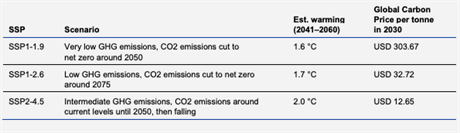
Treasury also includes commentary around the possible 2030 price per tonne of potential international mitigation, based on the Intergovernmental Panel on Climate Change Scenarios Data Explorer, ranging from $12.65 to $303.
Ben Taylor, who works in ESG advisory, commented that Treasury’s statement prompts questions about the government’s approach to meeting the NDC. “If a specified plan is published by the Government on how it will achieve NDC1, would this then likely meet [Treasury’s] constructive obligation criteria?”
New Zealand’s first Biennial Transparency Report under the Paris Agreement is due by 31 December 2024. This represents the first official communication tracking progress towards New Zealand’s first NDC.
print this story
Story copyright © Carbon News 2024

Environment ministry straining under pressure of reforms and potential disestablishment
Today 11:00am
The ministry responsible for New Zealand’s most significant resource management reform in a generation is doing so under institutional strain, compressed timeframes, and an uncertain future – including its own potential disestablishment.

Climate risks could reshape business finances, new guidance warns
Today 11:00am
By Shannon Morris-Williams New guidance warns climate change is set to fundamentally reshape financial outcomes for businesses, including difficult-to-model climate “tipping points” – irreversible changes such as ice sheet collapse or ocean circulation shifts – which threaten severe and sudden financial impacts.

Climate change could sharply increase NZ landslide risk
Tue 14 Apr 2026
By Shannon Morris-Williams | Climate change could significantly increase the number and intensity of landslides in New Zealand, with new research showing a Cyclone Gabrielle-scale storm in a warmer world could trigger tens of thousands more slips across a wider area.

Pūkaki consent battle becomes proxy for system risk
Tue 14 Apr 2026
The fight over Lake Pūkaki is no longer just about a consent change. It has become a proxy for how much New Zealand is willing to pay for electricity system resilience – and how that price should be set.

NZ’s latest push to roll out more EV chargers is a good thing – but can it go the distance?
Tue 14 Apr 2026
A $50 million plan to expand New Zealand’s public electric vehicle (EV) charging network marks another step toward a lower-emissions transport system.

Global uncertainty driving solar surge
Mon 13 Apr 2026
By Shannon Morris-Williams | Global instability and rising energy costs are pushing more New Zealanders towards solar, with companies reporting a surge in enquiries as households look for greater control and resilience in an increasingly uncertain energy landscape.

Self-interest should drive investment in overseas climate action, says former climate commissioner
Mon 13 Apr 2026
By Liz Kivi | Wealthy countries – including New Zealand – aren’t doing nearly enough to fund climate mitigation in the developing world, with new research saying we need to "change the conversation" to spark action in this vital area.

NZ aid cuts put Pacific climate response at risk
Mon 13 Apr 2026
By Shannon Morris-Williams | New Zealand’s aid spending dropped 12.8% in 2025, with Oxfam warning the cuts risk undermining climate adaptation efforts in the Pacific as the region faces an accelerating climate crisis.

Govt tweaks consenting rules for EV chargers
Fri 10 Apr 2026
By Shannon Morris-Williams | The Government has announced a national reset of planning rules for EV chargers, which it says aim to address infrastructure shortages which have put the brakes on electric vehicle uptake in New Zealand.

Activist ends five-day tree-top protest at West Coast coal mine
Fri 10 Apr 2026
By Shannon Morris-Williams | A climate activist has ended a five-day tree-top occupation that blocked access to Bathurst Resources’ Cypress Mine on the West Coast, in a protest against plans to expand what could become New Zealand’s largest coal mine.
