
Emissions down overall, despite higher electricity emissions
16 Sep 2024

 |
| Photo by Jas Min via Unsplash |
By Robert McLachlan
Although emissions from electricity have increased, according to the latest data, use of oil, coal, and gas has dropped off compared to the previous quarter.
The Energy Quarterly from the Ministry of Business, Innovation and Employment reports fossil fuel emissions from electricity generation, oil, and (industrial, i.e. non-electricity) coal and gas.
The June 2024 issue shows that oil, coal, and gas are all down from the previous quarter.
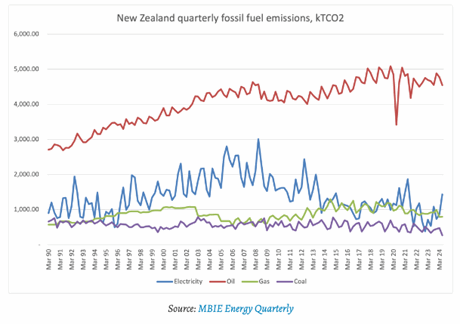
Electricity emissions increased, but even this is something of a good news story: despite inflows to the hydro lakes being at 90-year lows, new wind and geothermal plants completed in the last few years are avoiding 2 million tonnes of CO2 per year. As a result, we entered winter with lakes at average levels and they never fell anywhere near the warning line.
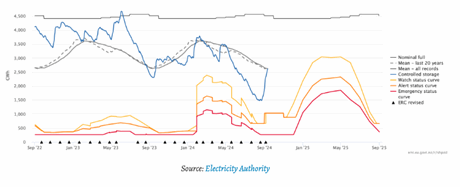
The lowest level of storage, around 1500 GWh, was not unusually low – similar or lower levels were reached in 4 of the previous 14 years.
Thus the investments triggered by the pro-climate Zero Carbon Act of 2019 meant that an electricity shortage was avoided. And annual electricity emissions, though off their lows, are still 59% below peak.
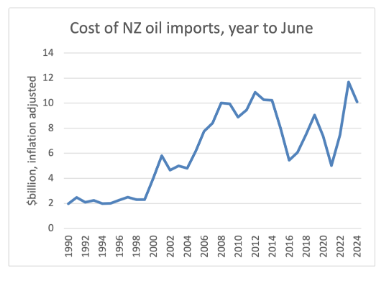
Oil accounts for two-thirds of emissions from the burning of fossil fuels. However, even oil consumption has been fairly flat for 11 quarters in a row, and remains 4% below record highs. High prices and behaviour change (and to a lesser extent EVs) are responsible. The cost of oil in real terms per capita has tripled since the 1990s.
 |
| IMAGE: Robert McLachlan |
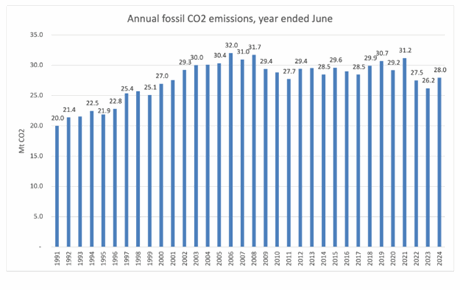
Industrial coal use is at record lows, and now 41% below peak. Gas use is 23% below peak. Overall, annual emissions are 9% below their peak.
 |
| IMAGE: Robert McLachlan |
print this story

Contact: New biodiversity goal may be 'highly problematic' for renewable projects
Today 12:00pm
By Oli Lewis | The goal of no net loss of indigenous biodiversity in the new resource management system may be highly problematic for renewable energy developments, Contact Energy says.

Biomass can free-up electrons to perform higher value roles – with multiple other benefits
Today 12:00pm
By Rob Mallinson | OPINION: New Zealand’s energy debate too often treats electricity as the universal solution.

Businesses told to plan ahead as energy risks mount
Thu 23 Jul 2026
By Shannon Morris-Williams | Switching to electricity and improving energy efficiency are becoming increasingly attractive investments in the face of rising costs – and companies can no longer afford a "business as usual" attitude to energy, according to a new report.

Only Genesis can invest in Huntly, Treasury told ministers
Thu 23 Jul 2026
Treasury backed Crown investment in Genesis Energy because only Genesis could invest in Huntly Power Station, but argued the company had no special claim on building more renewable generation.

Green Party takes ‘electric election’ up a notch
Tue 21 Jul 2026
By Liz Kivi | The Green Party is promising to cut power bills and establish a publicly owned company, ‘Kiwipower,’ to deliver affordable renewable energy.

SEANZ urges Govt not to sign contract for LNG before the election
Tue 21 Jul 2026
The Smart Energy Alliance has penned an open letter to the Government urging ministers not to sign a binding agreement for an LNG import facility before November’s election.

Clock ticks on Gas Security Fund as Tariki developer reports ongoing losses
15 Jul 2026
By Oli Lewis | A Canadian company advancing a major gas storage project in New Zealand continues to report ongoing losses.

$3m Govt boost for Tauranga geothermal energy
14 Jul 2026
By Liz Kivi | Resources Minister Shane Jones has announced a $3 million grant for the Gas to Geoheat Tauranga Geothermal System Project as part of the Government's plan to double geothermal energy by 2040.

Batteries and full lakes flatten winter power peaks
14 Jul 2026
Large batteries and more strategic use of hydro generation are starting to flatten winter electricity price peaks, reducing reliance on expensive thermal generation.

NZ lagging in energy storage investment – report
14 Jul 2026
Investment in energy storage is maturing globally, with the need for resilient and flexible power driving demand for storage, but New Zealand has some catching up to do, according to a new report.
