
Massive native reforestation project proposed
22 Dec 2023
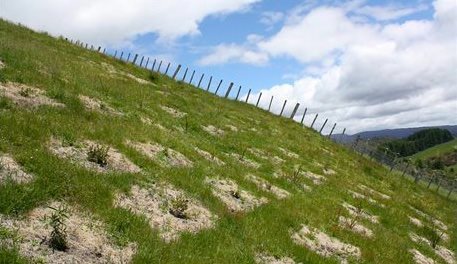
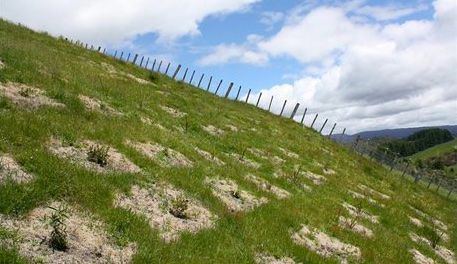
By Jeremy Rose | New Zealand could go from being a buyer of offshore carbon credits to an exporter of offsets, according to the promoters of an ambitious plan to reforest and restore 2.1 million hectares of indigenous forests over the next 10 years.
If the claims of those behind the Recloaking Papatūānuku project, officially launched yesterday by Pure Advantage and Tāne’s Tree Trust, are accurate it could be a game-changer - not only in New Zealand’s journey to net zero but in restoring biodiversity, protecting and improving the country’s waterways and soils, and firming up erosion prone lands.
Pure Advantage chair Rob Morrison said research had shown the initiative could capture 1500 million tonnes of CO2 between 2024 - 2100. That's equivalent to about 20 years worth of New Zealand’s current emissions.
He said that was likely to be in excess of what’s needed to meet the country’s Nationally Determined Contribution, with the possibility that the surplus could be sold into international carbon markets.
Carbon for $32 a tonne
The average abatement cost of those savings would be an estimated $32 per tonne of CO2 - significantly lower than the $60 cost, projected by Treasury, of offsetting New Zealand’s emissions offshore.
Treasury estimates meeting the country’s NDC will cost in the range of $3 - $24 billion between now and 2030. (The massive spread is due to uncertainty around the size of greenhouse gas reductions that will be achieved and the cost of offsetting offshore.)
By way of comparison the estimated cost of Recloaking Papatūānuku is $8.5 - $12.1 billion by 2050.
With planting proposed to begin next year at the earliest, few if any of the carbon credits will be generated in time to meet the country’s first NDC obligations due in 2030. (The restoration side of the project could conceivably generate some verifiable credits.)
But in planetary terms the COP deadlines are somewhat arbitrary and, while the country will be left with an initial bill, it could be on track to recoup some of those losses in the future.
Morrison said New Zealand had made legally binding commitments and that walking away from them wasn’t an option. “No country in the world relies on its green credentials as much as New Zealand.”
A partnership between Iwi, farmers, communities and government
Recloaking Papatūānuku would need to build a partnership between, Iwi, businesses, farmers, communities and the government. It was a science-based approach with a Maori values system, Morrison said.
It was true that it would require a big upfront investment by government but $12 billion was less than the $14 billion in damage caused by Cyclone Gabrielle - or about twice what the country spends on roads each year.
He said the project would help New Zealand meet its international commitments out to 2050, create jobs in the regions, and restore biodiversity, but most importantly it would give hope to our children and their children.
Morrison, a former investment banker, said he was yet to see a better proposal for dealing with New Zealand’s climate obligations. “It’s always easy to say no to a business opportunity or a visionary plan. But if you are going to say no, what’s your alternative?”
“We have an incredible opportunity to embrace the benefits of Recloaking Papatūānuku and position Aotearoa as a world-leader. This can be an intergenerational legacy for future generations and all living things. This is a long-term programme that needs immediate action,” Morrison said.
“For now, Recloaking Papatūānuku is an idea that has been thoroughly researched and analysed by some of the brightest minds in the country. It’s a seed that needs to be cared for and nurtured into a mighty kauri. The new government has an opportunity to embrace it and make it part of their lasting legacy, leading Aotearoa to a brighter future.”
He said it was concerning that the incoming ministers for climate and the environment were outside Cabinet but he hoped the new Government would see the proposal made not just good environmental sense but economic sense too.
How to pay for it?
Pure Advantage’s preferred funding mechanism would see the project paid for with repurposed NDC contributions and private funding in exchange for carbon credits with landowners receiving an annual incentive to support land use change.
Pure Advantage executive director Simon Millar said there were a number of reasons the ETS alone couldn't deliver a programme like Recloaking Papatūānuku on its own:
- Much of the Recloaking Papatūānuku reductions are long-term, continuing long after current ETS sectors need to be at near zero emissions. Only relying on the current ETS buyers offsetting their emissions to pay for Recloaking Papatūānuku is not a sustainable funding model.
- Recloaking Papatūānuku would introduce a large number of credits into the ETS, causing a larger oversupply of NZUs (with associated negative price impacts).
- Introducing this large number of credits would not support the ETS's role as a mechanism to reduce gross emissions: emitters would offset instead of reduce their emissions.
- The ETS is currently set up to deliver our domestic budgets, not the more ambitious Paris NDC - the additional reductions or removals to meet current and future NDCs are needed on top of what the ETS delivers.
- Because of all this, while there may well be a role for private investors, it will need to be outside/alongside the ETS.
- Limiting the amount of new pine plantations entering the ETS (which should lead to a somewhat higher ETS price) would mean additional ETS auction proceeds. some of which could help fund Recloaking Papatūānuku. Limiting forestry in the ETS to certain land classes was part of the National and NZ First manifesto.
Rob Morrison said Recloaking Papatūānuku had the potential to be a model for the world of how to successfully restore indigenous forests. “It could be New Zealand’s greatest ever export.”
A beautiful idea: Dame Anne Salmond
Dame Anne Salmond, just back from a trip to Tairāwhiti, said the floods over the weekend had underlined the urgency of doing something to stabilise the erosion prone region.
“People are wondering whether there is a viable future for them,” she said.
Research had shown that indigenous forests were ten times better at farm land and five times better than pine plantations at avoiding erosion.
“Rather than weeping at the wailing wall of climate change we need to do something about it. Recloaking Papatūānuku will allow us to stand tall in the world.
“It’s a beautiful idea and one we can work on together. Our country desperately needs this sort of project: One that unites us and gives us a sense of a plan.”
Emeritus Professor David Norton said interest and support around the country from conservation groups, farmers and iwi was huge.
“Recloaking Papatūānuku is going to be phenomenal. Farming communities are ready for this - they just need the support.”
He said Banks Peninsula - which has had a successful pest eradication programme - was a good example of a region with farms that had land suitable for returning to native forests.
Rangi Ahipene, the chair of a central North Island land trust, said many Maori landowners wanted to move away from planting pine but had no choice. “It’s the only shop in town.”
Recloaking Papatūānuku would provide an opportunity for Maori landowners to reconnect a “Tāne our Tipuna.”
Ahipene said the trust he chairs has several thousand hectares of land split between farm, pine plantation and some indigenous forests - including three dairy units.
One of those dairy units is uneconomic and Recloaking Papatūānuku could see it returned to native forests. The alternative could be the trust having to sell the whenua.
ETS promotes short-term thinking
The Recloaking Papatūānuku briefing documents argue that the ETS promotes short-term thinking that fails to recognise the superior long-term carbon yields and biodiversity benefits of indigenous forests.
“The ETS also fails to account for the risks and liabilities associated with short lived exotic tree monocultures beyond 50-years. These risks and liabilities are effectively being “kicked down the road” for future generations in Aotearoa to deal with. This is not the legacy we should be leaving our children and grandchildren.”
The initiative is being presented to the world at the UN Climate Change Conference (COP28) 2023 in Dubai early next month.
............
Republished for readers over the summer break, this article was first published on 29 November 2023. An earlier story on Recloaking Papatuanuku was published following the soft launch in October.
print this story

New legislation to bar climate torts proves polarising for submitters
Today 11:45am
By Liz Kivi | Opponents of legislation to block climate lawsuits say it could seriously damage investor confidence, while supporters of the same legislation argue that not passing it could be “devastating” for the New Zealand economy.
Climate adaptation plans welcomed, but funding remains the missing piece
Today 11:45am
By Oli Lewis | Experts are welcoming a proposal to make climate adaptation planning mandatory, but warn the plans may be ineffective without clarity around who will pay to implement them.

Conservation bill could put development ahead of protection, commissioner warns
Today 11:45am
By Shannon Morris-Williams | Parliamentary Commissioner for the Environment Simon Upton says the proposed law changes could give economic development greater weight than conservation, undermining the purpose of the Conservation Act.

Sustainable Business Council listed on submission supporting climate torts bar
Today 11:45am
By Liz Kivi | Business New Zealand’s submission supporting legislation to block climate lawsuits raised eyebrows this week for listing the Sustainable Business Council as seemingly in support of the controversial law change.

The arms race to climate calamity
Today 11:45am
COMMENT: Both Australia and New Zealand are justifying spending millions of dollars on high-end killing machines by hyping the so-called China threat, while downplaying the very real threat of climate change to the Pacific region, writes Jeremy Rose.

Media round-up
Today 11:45am
In our round-up of climate coverage in local media: The Prime Minister’s Office asked Z Energy to hand-deliver climate law briefing, the official watchdog warns of ‘catastrophic consequences’ if the electricity sector can’t adapt to a rush of rooftop solar, and angry customers are complaining about SolarZero contracts.

Government running out of time to lock in LNG import terminal deal before election
Thu 16 Jul 2026
By Oli Lewis | Procurement for a floating LNG import terminal in Taranaki is well advanced, the Government says, but the clock is ticking to sign contracts before the election.

Pacific coral reefs face mounting climate threat – experts
Thu 16 Jul 2026
By Shannon Morris-Williams | Coral reef scientists are warning that climate change is accelerating the decline of reef ecosystems across the Pacific, with rising ocean temperatures, marine heatwaves and sea-level rise threatening both biodiversity and the communities that depend on them.

Rich nations inflate climate finance as NZ urged to act
Thu 16 Jul 2026
By Shannon Morris-Williams | Rich countries have overstated the value of climate finance delivered to developing nations by around US$100 billion in 2024, Oxfam says. The non-profit is urging New Zealand to increase its climate finance while applauding the country's strategy of allocating finance as grants rather than loans.

Climate law introduced requiring adaptation plans and reducing Commission's role
Wed 15 Jul 2026
By Oli Lewis | The Government has introduced legislation to amend the Climate Change Response Act (CCRA), which includes stripping the Climate Change Commission of one of its core roles, adds a new requirement for councils to produce adaptation plans for higher-risk areas, and updates ETS settings.
