
Parliament unites to stop gifting of carbon credits to big emitters
22 Feb 2023
 |
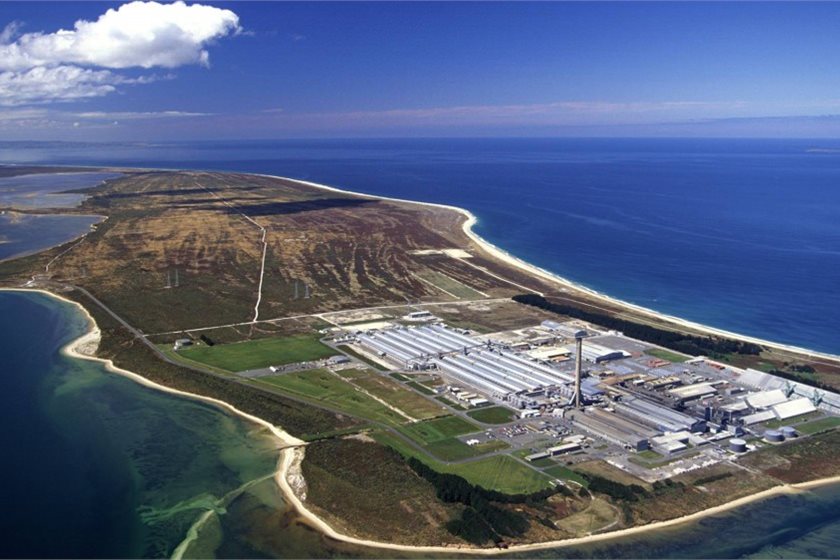
| Tiwai Point Aluminium Smelter. |
Parliament has unanimously supported the first reading of an amendment bill that puts an end to the over-allocation of carbon credits to trade-exposed industries. The current system of “industrial allocation” has seen some of the country’s biggest emitters receiving a $60 million annual windfall.
The Climate Change Response (Late Payment Penalties and Industrial Allocation) Amendment Bill, which had its first reading last night, will see the number of carbon credits allocated to trade exposed industries adjusted for the first time since the Emissions Trading Scheme was established in 2008.
Introducing the bill, climate change minister James Shaw explained that, when the ETS was launched, the then-government decided some companies would receive up to 90% of their pollution credits for free.
“The purpose of this was to help protect these companies from more lightly regulated competitors outside of New Zealand. However, the baseline that was used to decide how many credits each company would receive is exactly the same today as it was 12 years ago,” he said.
Many of those receiving the free allocation - like NZ Steel and the Tiwai Point Aluminium Smelter - have adjusted the way they do things and significantly cut their emissions since then.
Shaw said this had led to a situation where many of the country’s biggest polluters were getting more carbon credits than they needed “offering them windfall gains and costing New Zealand $60 million a year.”
Change overdue
“Our biggest polluters should receive only the credits that they need, making sure that they play their part in meeting our climate targets. Changes to industrial allocation are long overdue, and making those changes now will help us to meet our carbon budgets and our international obligations to cut emissions,” he said.
The idea behind the free credits is that they protect NZ industries from being undercut by competitors in countries with no price on carbon.
With NZUs currently trading at less than half of the cost of carbon in Europe, those same companies could find themselves facing tariffs should they wish to export to the continent.
If adopted, the new Act will allow for baselines to be reviewed every five years and all allocative baselines will be reviewed every 10 years.
Shaw asked the select committee to pay particular attention to a proposal that could see the eligibility for industrial allocation increase in some sectors.
“I did take the official advice on this, but I am keen to hear what the select committee has to say about it.”
“Pragmatic” changes: National
Responding on behalf of the National Party, Scott Simpson described the proposals in the bill as “exactly the kind of pragmatic, sensible, practical changes that a National Party government would do if we were in the position to be able to do that.”
Simpson said his one concern was that reporting back by 20 July as proposed could be a big ask for a select committee with “wee bit of work on at the moment.”
He said New Zealand would still need steel and aluminium in 2050 when it had reached its net zero goals.
“So those are businesses that, in our view, are worth protecting and ensuring that they are viable and that they are profitable and that they continue to employ large numbers of New Zealanders in an important sector. But because the allocations were set quite a number of years ago, some of those businesses now, because of their improved systems and manufacturing and way of doing business, actually don't need as many allocated units as the Government is currently giving them.”
National’s full-throated support for the bill could be a sign it’s keen to stop climate change becoming a key election issue.
This won’t have been helped by National MP Maureen Pugh yesterday, who said that she had "yet to see" evidence of man-made climate change. Pugh attempted to walk back the comments after they were immediately shot down by the party leadership. Leader Christopher Luxon told RNZ he had a clear message for his caucus: "If you're a climate denier or climate minimiser today, that's just not an acceptable position."
ACT fears companies will leave NZ
ACT MP Simon Court said that removing the free industrial allocations would send businesses offshore. “If we put these companies' carbon charges up, they're simply going to leave, we'll export the emissions to another country—they'll still happen; it'll just cost us a lot more to buy the same stuff.”
He said that every other party’s approach to climate change is “fundamentally flawed”. “It looks at New Zealand as if all of our emissions need to be controlled within New Zealand, in a bubble, even though it's a global problem.”
Court said that ACT would tie emissions reduction targets to those of New Zealand’s top five trading partners. “But guess what! They're not reducing their emissions, because their populations are growing and their energy demands are growing.”
He would like local businesses to be allowed to offset their emissions offshore. “At the end of the day, we should, in fact, be focusing on mitigation.”
ETS penalties for small forestry operations
The bill also addresses penalties for small forestry participants - with average yearly forestry liabilities of fewer than 25,000 units - when they fail to pay units on time. New penalties came in at the start of 2021 for ETS participants who fail to surrender units on time.
But, as the penalties were set at three times the price of carbon, the government was concerned that higher penalties could cause serious hardship for small forestry participants. To avoid this, penalties for small forestry operators were kept at the old rate, however this arrangement will expire at the end of next year.
print this story
Story copyright © Carbon News 2023

'Get on with it': Greens push for pre-election solar law
Thu 9 Jul 2026
By Shannon Morris-Williams | The Green Party is calling on Parliament to pass legislation enabling low-cost household solar finance before the election, arguing there is now cross-party support following Labour's SolarSaver announcement and National's earlier Home Energy Fund pledge.

Govt backs hydrogen with national industry summit
Thu 9 Jul 2026
By Oli Lewis | The Government is convening a major hydrogen conference to promote awareness and uptake of the alternative fuel.

Hurunui to notify climate solution plan change
Thu 9 Jul 2026
By David Hill, Local Democracy Reporter | A North Canterbury council is looking to progress "a uniquely Hurunui solution’’ to sea level rise.

Media round-up
Thu 9 Jul 2026
In our round-up of climate coverage in local media: The Government re-wrote fast-track law after mining companies pushed for change; costs from inland flooding are expected to rise by up to 53% by 2075; and is there such a thing as a sustainable tourist?

'Electric election': Labour promises $160m SolarSaver scheme funded by gas investment cuts
Wed 8 Jul 2026
By Oli Lewis | Labour is promising to reprioritise $160 million from the Gas Security Fund to pay for its new SolarSaver policy, designed to accelerate the roll-out of household solar.

Experts sound alarm over escalating climate impacts
Wed 8 Jul 2026
By Shannon Morris-Williams | Scientists are warning climate impacts are accelerating across our region after a World Meteorological Organization report found last year was the South-West Pacific's second-warmest on record, with impacts including rising seas, marine heatwaves and extreme weather.

Energy Minister completes overhaul of EECA board
Wed 8 Jul 2026
By Oli Lewis | The board of the Energy Efficiency & Conservation Authority (EECA) has been completely overhauled since the last election, with Energy Minister Simeon Brown responsible for all six appointments.

‘We sure as hell ain't sending billions offshore’: Luxon on Paris target
Wed 8 Jul 2026
By Liz Kivi | Prime Minister Christopher Luxon has again said he won’t “send billions offshore” to meet New Zealand’s international climate target.
Pūkaki consent puts dry-year rules in spotlight
Wed 8 Jul 2026
Meridian Energy’s approval to draw Lake Pūkaki below its normal operating range has exposed a gap in New Zealand’s electricity security arrangements.

Seymour ‘imploring’ council to go easy on foresters is abuse of authority: EDS
Tue 7 Jul 2026
By Liz Kivi | The Environmental Defence Society says that Regulation Minister David Seymour’s attempt to influence Gisborne District Council to ‘go easy’ on forestry companies in enforcing environmental laws is a clear abuse of ministerial authority.
